RFP Evaluation Criteria: Guide with Examples and Scoring Best Practices
Learn how RFP evaluation criteria and scoring examples shape vendor selection. Use proven methods to improve fairness, transparency, and win rates.
.avif)
RFP evaluation criteria determine which vendors succeed and which fail. These scoring standards are how buyers measure proposals.
Many response teams overlook them. Instead of tailoring answers to what matters most to evaluators, they often scramble to meet deadlines and submit generic responses.
That approach wastes time and costs deals. Vendors invest almost 24 hours on every RFP, but without aligning to evaluation criteria, much of that effort never converts into higher scores.
This guide breaks down RFP evaluation criteria, shows why they shape every decision, and shares examples you can put into practice.
Winning Insights
- Evaluation criteria decide who wins an RFP, and vendors that tailor responses to them gain a measurable scoring advantage.
- Frameworks range from simple checklists to weighted scoring systems and multi-factor matrices, each requiring a different vendor response strategy.
- Criteria are built through stakeholder input, scope definition, and priority setting, giving vendors a roadmap to anticipate what matters most.
- Vendors who align with best practices: transparency, guides, and balanced detail, turn criteria into a playbook for cleaner, higher-scoring proposals.
- Real-world proof shows vendors using structured criteria and AI support cut response cycles by days and increase shortlist rates.
What Are RFP Evaluation Criteria
At their core, evaluation criteria are the rules buyers use to decide who wins.
They bring structure to the selection process by focusing on what matters most. Think of them as the checklist that evaluators apply across every proposal:
- Definition: Standards used to measure vendor responses
- Purpose: Ensure fairness, consistency, and transparency
- Benefit for buyers: Easier to compare vendors on equal footing
- Advantage for vendors: A clear roadmap for shaping stronger, higher-scoring answers
Knowing what evaluation criteria are is only half the story. You’ll see a lot more success once you understand why they matter in every decision.
Also Read: RFQ vs RFP: What Vendors Need to Know Before Responding
Why RFP Evaluation Criteria Matter

The typical success rate for winning Requests for Proposals (RFPs) stands at just 44%, which means more than half of vendor efforts fail to secure the business. Evaluation criteria are more than scoring rubrics. They shape how decisions are made and what vendors need to emphasize.
Here’s why they matter for both buyers and vendors:
1. Fairness and Transparency
Every vendor is measured against the same standards, which reduces bias and subjectivity. Buyers can justify their choice with clear evidence, while vendors know the process is not arbitrary.
2. Consistency in Selection
Criteria standardize how proposals are reviewed. Instead of evaluators weighing responses differently, scoring frameworks keep judgments aligned. This consistency is critical when multiple stakeholders are involved.
3. Higher-Quality Responses
Vendors that pay attention to evaluation criteria avoid vague, boilerplate answers. Instead, they focus on what evaluators have explicitly prioritized, which raises the quality of responses across the board.
4. Competitive Advantage
Teams that align their answers with scoring rubrics don’t just check boxes—they highlight strengths in ways evaluators can measure. This gives them an edge against vendors who treat the RFP as a generic questionnaire.
5. Efficient Decision-Making
Evaluation criteria cut down review time for buyers by narrowing attention to what matters most. For vendors, that means well-targeted answers are more likely to stand out quickly in crowded review sessions.
6. Closer Alignment with Buyer Goals
Strong criteria reflect business objectives, whether it’s lowering costs, improving service, or ensuring innovation. Vendors that mirror these goals in their responses build trust and credibility.
When vendors focus on the scoring system, guesswork disappears. Responses become sharper, more relevant, and far more likely to earn top marks from evaluators.
Types of RFP Evaluation Criteria
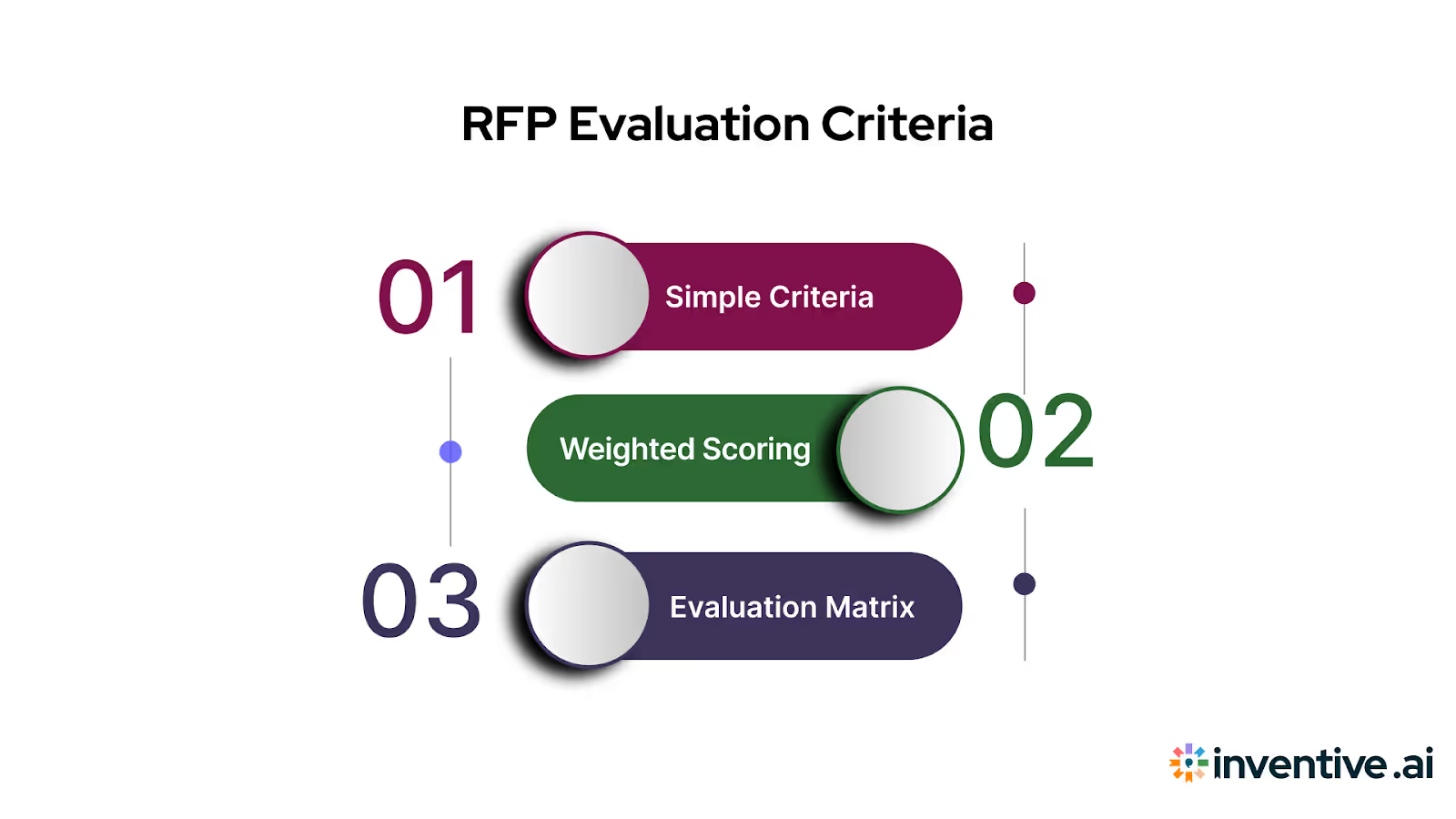
Alt Text: An infographic illustrating the three types of RFP evaluation critera
Not every RFP uses the same scoring system. The type of evaluation criteria tells you how much detail evaluators expect and where to focus effort:
- Simple Criteria: Best for low-risk or straightforward projects.
Evaluators may focus only on cost, delivery timeline, or references.
Vendors should prioritize clarity and reliability over complex details. - Weighted Scoring: Common for mid-range projects that balance cost with quality.
Each factor carries a value, such as 40% for price, 30% for technical fit, 20% for service quality, and 10% for references. Vendors gain an edge by tailoring responses to the most heavily weighted areas. - Evaluation Matrix: Used for complex or strategic purchases with multiple stakeholders. Each criterion is scored on a scale, often with both technical and business reviewers involved. Vendors need comprehensive answers that speak to every stakeholder’s perspective.
Once you know the scoring method, you can target your effort where it counts most. The next step is seeing how those criteria are organized into frameworks that keep evaluations consistent and clear.
How to Create Evaluation Criteria
Strong evaluation criteria do not appear by chance. They are built through a deliberate process that reflects both business goals and stakeholder priorities. Following a structured approach ensures scoring is fair, transparent, and effective.
Step 1: Define Your Core Objectives and Non-Negotiables
Begin by clarifying what success looks like for the project. Identify the must-haves, such as compliance requirements, budget constraints, or technical capabilities. These non-negotiables become the foundation for every other scoring factor.
Step 2: Assemble Your Stakeholder Evaluation Team
Bring together representatives from all relevant groups, including procurement, IT, finance, operations, and end users. Involving multiple voices ensures the criteria reflect a full picture of business needs, not just the priorities of one department.
Step 3: Brainstorm and Categorize Criteria
List potential evaluation factors and sort them into categories such as:
- Technical: product functionality, integration, security, scalability
- Financial: pricing structure, total cost of ownership, ROI potential
- Vendor Viability: reputation, track record, compliance certifications, long-term support
This categorization balances business and technical considerations, making the evaluation both rigorous and practical.
Step 4: Implement a Weighted Scoring System
Assign weightings to each criterion based on importance. For example, technical fit might carry 40 percent, financial factors 30 percent, and vendor viability 30 percent. Weighting helps evaluators focus their attention where it matters most and reduces subjectivity in scoring.
Step 5: Create a Standardized Evaluation Matrix
Translate the criteria and weights into a scoring matrix. This allows evaluators to score each vendor consistently on the same scale, side by side. A matrix also creates an auditable trail that supports transparency and defends final decisions.
Pro Tip: Keep the process documented. A repeatable framework not only improves the fairness of each decision but also builds trust with vendors who value consistency and transparency.
RFP Evaluation Criteria Examples
Admittedly, unless you see it in action, RFP evaluation criteria can feel abstract. The best way to understand it is through real examples across industries.
Below are practical samples showing how organizations structure scoring, from simple lists to weighted multi-factor systems.
1. Marketing Services (Simple Example)
When evaluating creative or marketing vendors, issuers often keep the scoring light and direct. Price, references, and ability to meet timelines dominate.
Takeaway: Vendors that keep pricing clear and showcase a strong portfolio win points quickly.
2. Healthcare Technology (Weighted Scoring)
Healthcare RFPs emphasize compliance, patient safety, and data security in addition to cost.
Takeaway: Healthcare buyers reward vendors that prove regulatory strength and security first, even above price.
3. IT & Data Analytics (Multi-Factor, Staged Rounds)
Tech RFPs often use multi-stage evaluation to filter vendors before scoring deeper on capabilities.
Round 1 (Pass/Fail)
- Minimum qualifications
- Mandatory technical requirements
Round 2 (Weighted Scoring)
Round 3 (Finalists)
Takeaway: Staged scoring helps procurement teams filter vendors early, saving time while still rewarding technical fit and business alignment.
4. Construction Projects (Cost-Effectiveness Focus)
For capital projects, cost and scheduling discipline outweigh creative approaches.
Takeaway: In construction, evaluators weigh execution strategy and budget control above all else.
5. Employee Benefits (Service-Oriented Weighted Model)
When selecting benefits administrators, HR leaders consider compliance, quality of service, and the employee experience.
Takeaway: Vendors that simplify compliance while keeping costs transparent gain the advantage.
All of these models show how evaluation criteria shift with industry priorities:
- Marketing = creativity + results.
- Healthcare = compliance + security.
- IT/Data Analytics = technical depth + staged scoring.
- Construction = budget + execution discipline.
- Employee Benefits = compliance + service quality.
Vendors that align their responses with weighted priorities consistently score higher and shorten the path to an award.
These examples also prove that every industry values different factors, and the vendors who tailor their responses to match those priorities consistently score higher. With that in mind, let’s explore how to organize your evaluation criteria so the scoring process stays clear, fair, and easy to manage.
How to Organize RFP Evaluation Criteria
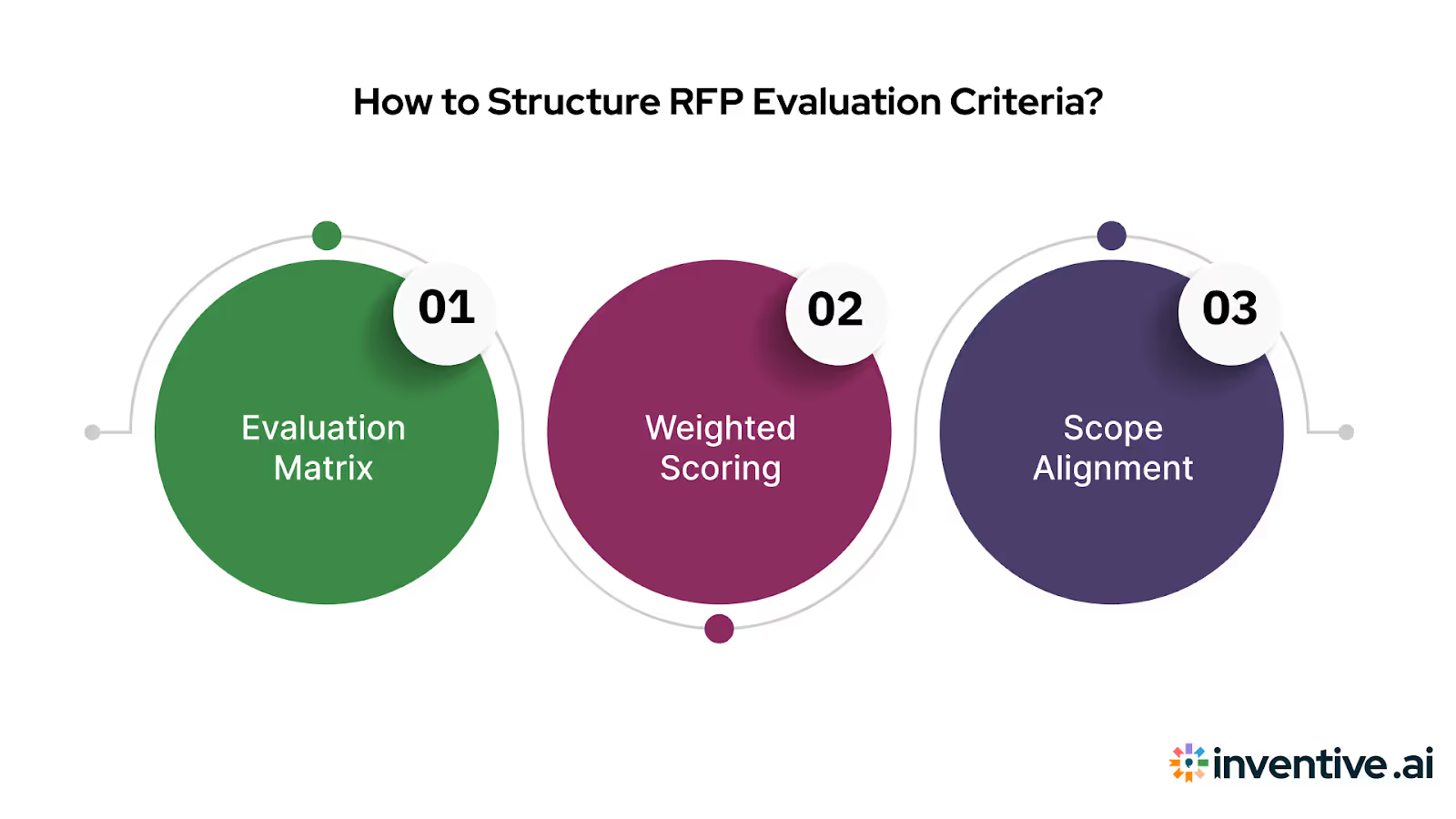
Clear organization turns evaluation criteria into a scoring system that evaluators can actually use. For vendors, understanding this structure provides clues on where to focus.
- Evaluation Matrix: Criteria are laid out in rows, with scores assigned across columns. This format makes it easier for evaluators to compare vendors side by side. Vendors should aim for crisp, measurable answers that fit neatly into each row.
- Weighted Scoring: Each criterion is given a percentage value to reflect importance. This method forces evaluators to prioritize certain factors over others. Vendors should focus on the high-value areas, ensuring their strengths are clearly evident where the most points are at stake.
- Scope Alignment: Criteria are often grouped by project scope, technical fit, cost, support, and innovation. This creates balance across business and technical needs. Vendors need to make sure their responses address each group fully, not just the one they feel strongest in.
A structured scoring system makes evaluations more transparent and more predictable. For vendors, it’s a reminder to be precise, highlight strengths where they matter most, and avoid leaving gaps.
Understanding how criteria are organized naturally leads to the following question: how are they created in the first place, and what does that mean for vendors?
Free Download: RFP Evaluation Matrix Template
Scoring vendors should not be complicated. A structured evaluation matrix ensures every proposal is reviewed fairly, consistently, and with full transparency.
With our RFP Evaluation Matrix Template (Excel and Google Sheet), you can:
- Standardize scoring across multiple evaluators
- Compare vendors side by side with weighted criteria
- Save hours with a ready-to-use framework
- Ensure fairness and transparency in vendor selection
- Customize categories such as technical, financial, compliance, and vendor viability to fit your project
This template is built for CROs, VPs of Sales, proposal managers, and procurement leaders who want to make better decisions while saving time.
Best Practices for RFP Evaluation Criteria
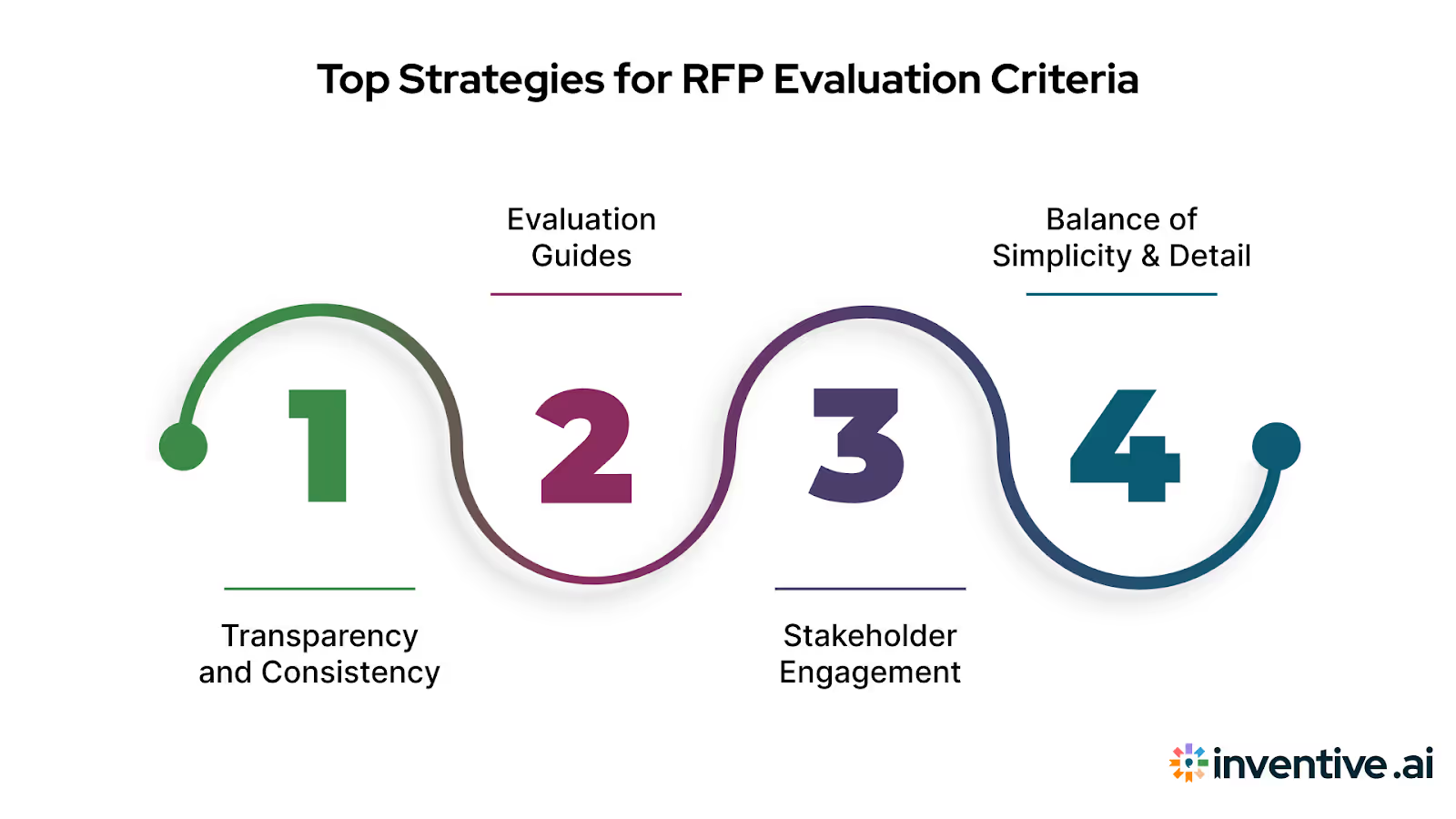
Strong evaluation criteria don’t just guide buyers. They also give vendors a chance to respond with sharper, more targeted proposals. These practices keep scoring fair and consistent while signaling where vendors should focus.
1. Analyze Criteria Weights and Prioritize Response Efforts
Most vendors spend equal time on every RFP section, but this approach wastes resources on low-impact areas. Smart proposal teams allocate their effort based on how much each criterion affects the final score.
Start by mapping the buyer's stated criteria weights to your response timeline. If technical criteria account for 40% of the total score, spend 40% of your proposal development time perfecting those sections. Create a response strategy document that shows exactly how your team will distribute time and resources.
Here's how to optimize your effort allocation:
- High-Weight Focus Areas - Assign your best subject matter experts to criteria worth 25% or more of the total score.
- Medium-Weight Balance - Use experienced team members for criteria worth 15-25% of the score.
- Low-Weight Efficiency - Handle criteria under 15% with standard responses and minimal customization.
- Quality Control Checks - Review high-weight sections multiple times while doing basic checks on lower-weighted areas.
This approach helps you win more deals by focusing energy where it creates the biggest scoring impact. Teams that master RFP automation often allocate resources more efficiently across multiple opportunities.
2. Use Specific Examples and Quantifiable Results
Generic responses like "we have extensive experience" aren’t effective because they don't prove real capability. Buyers award higher points to vendors who provide concrete evidence of success in similar situations.
Build your proposal around specific client stories that match the buyer's industry, company size, or project scope. Replace vague claims with measurable outcomes that demonstrate your track record.
Transform weak responses into winning ones:
- Before - "Our team has deep implementation experience across various industries."
- After - "We've completed 23 healthcare software implementations in the past 18 months, achieving average go-live times of 8 weeks with 95% user adoption rates."
- Impact Metrics - Include percentage improvements, cost savings, timeline reductions, and user satisfaction scores.
- Similar Context - Choose examples from companies with comparable size, complexity, and industry challenges.
3. Address Every Scoring Element Explicitly
Many proposals lose points by partially answering questions or missing subtle requirements within evaluation criteria. Create a compliance matrix that maps every scoring element to specific sections in your proposal response.
For complex technical criteria, break down your response into clear subsections that directly address each evaluation component. If the buyer scores "integration capabilities" across five different systems, provide detailed explanations for each system rather than a general integration overview.
- Complete Coverage - List every evaluation sub-criteria and confirm you've addressed each one directly.
- Cross-Reference Links - Include page numbers or section references that show evaluators where to find specific information.
- Visual Organization - Use headers, bullet points, and tables to make it easy for buyers to locate answers.
- Compliance Tracking - Build a checklist that ensures no evaluation element gets missed during response development.
This systematic approach prevents lost points from incomplete answers and shows buyers you understand their requirements.
4. Demonstrate Deep Understanding of Buyer-Specific Challenges
High-scoring proposals show you've done your homework about the buyer's unique situation. Research their recent news, industry pressures, and specific pain points mentioned in the RFP document.
Generic benefit statements work for any buyer, but customized responses that address specific challenges score much higher. Reference their existing systems, current processes, and stated objectives throughout your response.
Show buyers you understand their world by including details about their industry trends, regulatory requirements, or competitive pressures. This personal touch often makes the difference between winning and losing close competitions.
5. Provide Detailed Implementation and Support Plans
Implementation criteria often determine final vendor selection even when technical scores are close. Buyers want confidence that you can actually deliver what you promise within their timeline and budget constraints.
Develop detailed project plans that include specific milestones, resource assignments, risk mitigation strategies, and success metrics. Don't just provide high-level timelines - show exactly how you'll manage the project from kickoff to completion.
Your implementation response should cover:
- Phase-by-Phase Breakdown - Show specific deliverables and timelines for each project stage.
- Resource Allocation - Name key team members and their roles throughout the implementation.
- Risk Management - Identify potential challenges and your specific mitigation strategies.
- Communication Plans - Detail how you'll keep stakeholders informed and handle escalations.
- Success Metrics - Define measurable outcomes that prove implementation success.
Strong implementation planning demonstrates professionalism and reduces buyer concerns about project risk.
6. Include Relevant Social Proof and References
Vendor qualification criteria typically include references and case studies from similar projects. Don't just list contact information - provide detailed case studies that demonstrate your capability in scenarios like the buyer's situation.
Choose references strategically based on industry, company size, project complexity, and outcomes achieved. Include specific results, lessons learned, and how you handled challenges that the prospective buyer might face.
- Industry Match - Select references from the same or similar industries when possible.
- Size Similarity - Choose clients with comparable revenue, employee count, or transaction volume.
- Scope Alignment - Reference projects with similar complexity, timeline, or technical requirements.
- Outcome Focus - Highlight measurable business results rather than just project completion.
Strong references build buyer confidence and often tip close decisions in your favor.
7. Optimize Your Pricing Strategy for Financial Criteria
Financial evaluation goes beyond having the lowest price. Present your pricing in a format that makes it easy for buyers to compare options and understand total value. Break down costs by category, timeline, and optional components.
Smart pricing presentations highlight value-added services, included features, and long-term cost savings that justify your rates. A structured breakdown of your pricing can also help, especially when buyers need to present your proposal to multiple stakeholders or budget committees. If evaluation criteria include total cost of ownership, provide detailed projections showing lower ongoing costs even if upfront pricing is higher.
Structure your pricing to score well:
- Clear Breakdown - Separate implementation, licensing, training, and ongoing support costs.
- Value Justification - Explain what buyers get for their investment and why it's worth the cost.
- Flexibility Options - Offer different service levels or implementation approaches to fit various budgets.
- Long-term View - Show total cost of ownership over 3-5 years, not just first-year expenses.
Strategic pricing presentation often determines whether you advance to final vendor selection rounds.
These strategies help you craft responses that score higher across all evaluation categories while building genuine buyer confidence in your ability to deliver results.
Also Read: How to Create an Effective RFP Response
How AI Supports RFP Evaluation Criteria
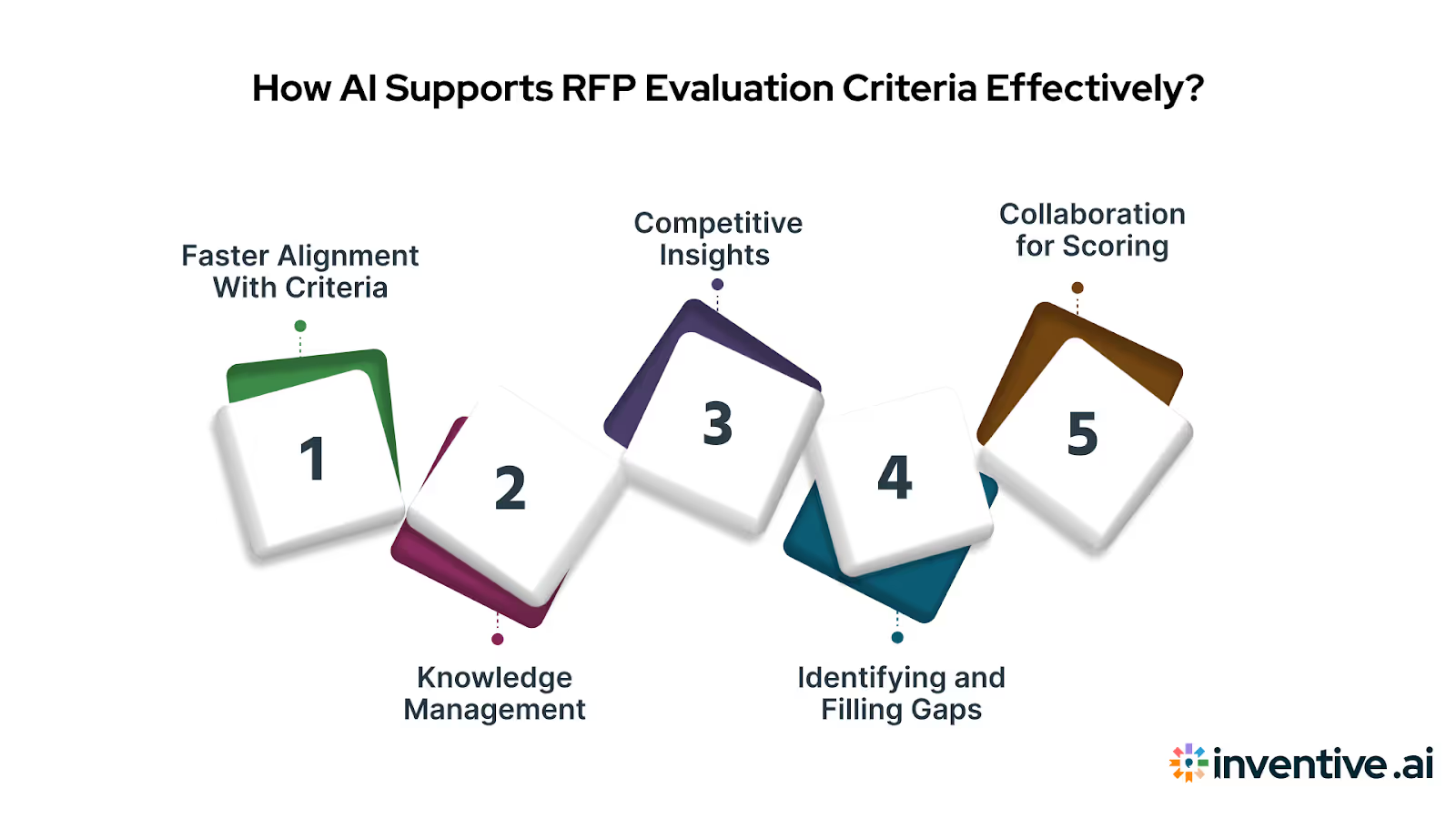
Understanding evaluation criteria is one step. Consistently aligning responses with them is the real challenge. This is where AI makes a difference, shifting the process from manual interpretation to structured, criteria-focused responses that evaluators can score with confidence.
1. Faster Alignment With Criteria
AI quickly generates first drafts that mirror evaluator priorities. Instead of guessing what matters most, proposal teams start with a draft already tied to scoring models, giving them more time to refine strategy and tailor responses.
2. Reliable Knowledge Management
Evaluation scores often depend on accuracy and consistency. AI centralizes content into a single knowledge base and flags outdated or conflicting answers. Teams work with a single source of truth, ensuring evaluators view information that is current and reliable.
3. Contextual and Competitive Insights
AI can analyze buyer language, competitor positioning, and historical responses to highlight what evaluators are likely to value most. This helps teams emphasize differentiators rather than settling for generic or safe answers.
4. Identifying and Filling Gaps
AI highlights areas where responses do not fully align with scoring priorities. By mapping answers against evaluation frameworks, it ensures no requirement is overlooked and proposals reflect what evaluators care about most.
5. Collaboration That Improves Scoring
Strong scores rely on input from multiple stakeholders. AI-enabled platforms streamline collaboration through role assignments, version control, and real-time conflict detection, reducing the risk of late errors that cost points.
Instead of relying on manual effort and interpretation, AI creates a structured path where every response is connected to the criteria evaluators use. The result is faster cycles, fewer mistakes, and proposals that consistently score higher.
How Inventive AI Helps Teams Win Against Evaluation Criteria

AI makes evaluation criteria easier to meet by combining automation, intelligence, and collaboration in ways manual processes cannot match.
Each feature is designed to cut response times, boost accuracy, and sharpen competitiveness:
1. AI-Powered Responses With Citations
Inventive AI generates responses with built-in citations and confidence scores. Every claim is verifiable, which eliminates the risk of fabricated answers and builds trust with both internal reviewers and external evaluators.
Teams complete first drafts 10x faster, while maintaining 95% accuracy and a 0% hallucination rate. This gives decision-makers confidence that every proposal detail stands up to scrutiny.
2. Context-Aware AI Agents
Specialized agents analyze buyers, competitors, and deal context to shape proposals that highlight true differentiators. This ensures responses are targeted and relevant instead of generic.
By aligning directly with evaluator priorities, organizations see win rates improve by over 50%. Context-rich proposals consistently score higher and create a stronger competitive position.
3. Collaboration Workspace
Inventive AI offers a shared workspace with role assignments, Slack updates, and structured workflows. Cross-functional teams stay aligned from start to finish without version chaos.
This approach reduces last-minute errors and ensures every department contributes on time. Proposals are completed 90% faster, freeing resources for high-value strategy instead of coordination.
4. Full Tone & Style Control
Proposal teams can instantly adjust tone, voice, and level of detail to match buyer expectations. Evaluators value clarity and professionalism, and Inventive makes sure every response delivers exactly that.
Whether an RFP requires concise, technical, or persuasive language, Inventive empowers teams to craft responses that are sharper and more evaluator-ready.
Case Study: Faster Turnaround
A mid-market technology vendor cut response cycles from five days to two by focusing responses around evaluation criteria. Using Inventive AI’s Knowledge Hub and Win Themes, the team quickly aligned proposals with what mattered most to evaluators.
What Customers Are Saying
"Inventive AI helped us cut response time dramatically while keeping every answer aligned with evaluator priorities. Our proposals feel sharper, and evaluators notice." – Verified G2 Reviewer.
Real-world results prove that when response teams stop guessing and start aligning with how evaluators score, they not only work faster but also win more often.
FAQ
1. How do RFP evaluation criteria improve fairness?
They ensure every vendor is measured against the same standards. This removes bias and makes decisions easier to justify.
2. What is the difference between weighted scoring and an evaluation matrix?
Weighted scoring assigns percentages to each criterion, while a matrix uses scales to compare vendors side by side. Both methods help evaluators stay consistent.
3. How can vendors adapt responses to align with evaluation criteria?
By studying the criteria closely, focusing on the highest-weighted areas, and mirroring buyer priorities in each response.
4. Why do evaluators prefer standardized scoring methods?
Standardized methods make reviews faster and more transparent, especially when multiple stakeholders are involved.
5. How does AI help vendors tailor responses to evaluation rubrics?
Tools like Inventive AI accelerate first drafts, centralize knowledge, and surface win themes so every response aligns with what evaluators value most.

.avif)