10 Best AI Software for B2B SaaS Revenue Teams in 2026
Compare the 10 best AI software for B2B SaaS revenue teams in 2026 by category, pricing, and best-fit use case.
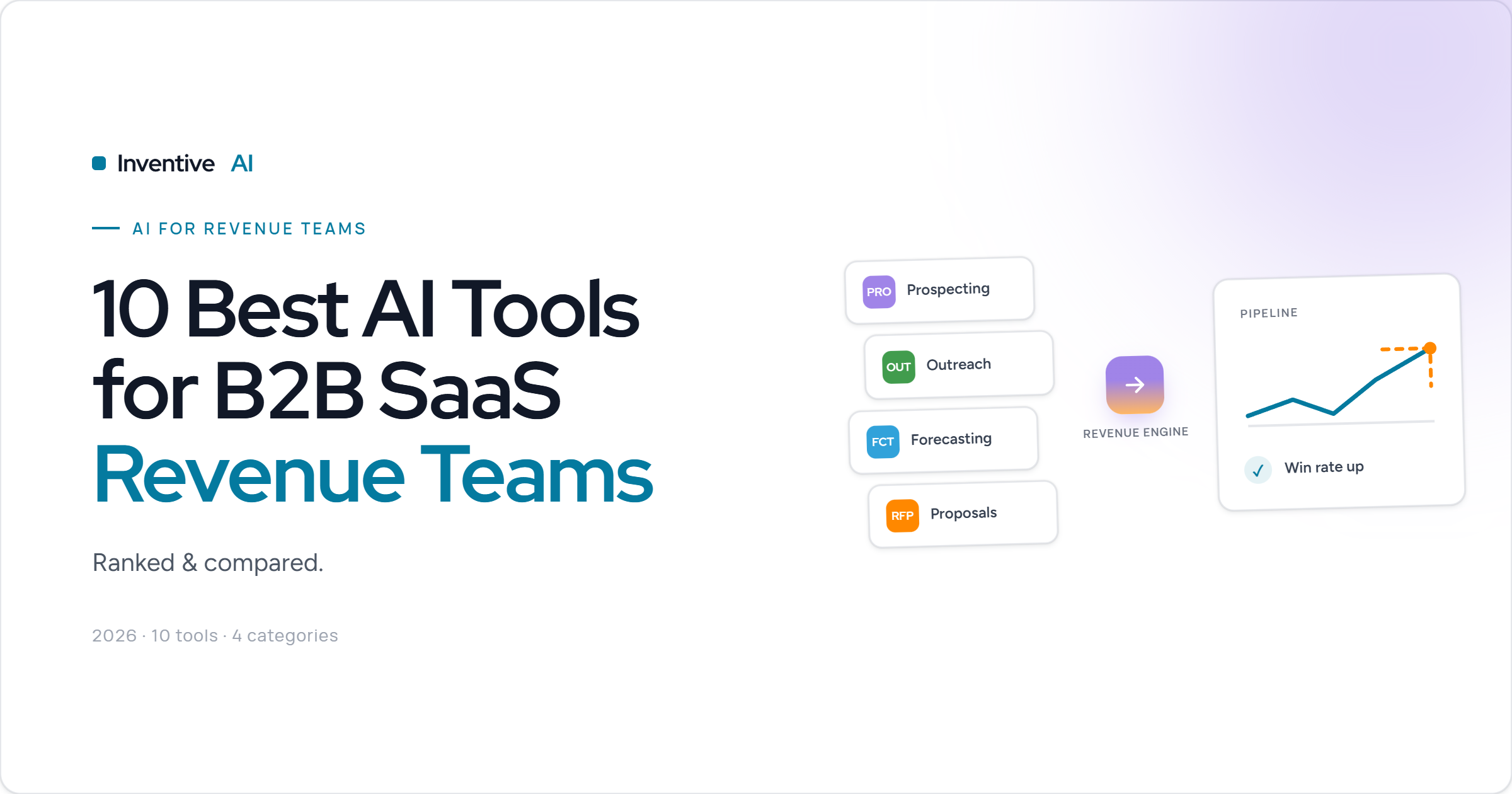
AI now runs through every stage of the B2B SaaS revenue engine: finding accounts, personalizing outreach, forecasting deals, and drafting RFP responses. The reason: reps barely get to sell.
Salesforce finds sales reps spend under 30% of their week actually selling. The rest goes to emails, CRM updates, and proposals. AI takes that busywork back so teams sell more without adding headcount.
Here are the top AI software B2B SaaS revenue teams are using in 2026, what each does, how it's priced, and where it fits.
Key takeaways
- Proposals & RFPs: Inventive AI: Generates first-draft RFP and security-questionnaire responses from your own knowledge hub, so presales stop rewriting boilerplate.
- Forecasting & deal inspection: Clari: Predicts revenue and flags at-risk deals so leaders see pipeline problems early.
- Conversation intelligence: Gong: Records and analyzes calls to surface buyer sentiment, objections, and coaching cues.
- Prospecting & intent data: 6sense, Cognism, Clay: Identify in-market accounts and enrich verified contact data so reps target the right buyers.
- Outreach & CRM: Apollo/Salesloft for AI-drafted multi-channel sequences; HubSpot and Salesforce (Agentforce) for AI baked into the CRM itself.
The 4 Types of AI Software for B2B SaaS Revenue Teams

Every SaaS deal follows the same path: find the buyer, reach out, manage the deal, respond to their formal evaluation. AI softwares map to those stages in four categories. Match the category to where your team loses the most time.
- Prospecting & intent data: Tells you which companies to contact and who to reach, using buying signals and verified contact data so reps skip dead-end accounts. Best when reps target the wrong people. (6sense, Cognism, Clay)
- Outreach & engagement: Writes and sends personalized follow-ups across email, LinkedIn, and calls, not copy-paste templates. Best when outbound is slow or generic. (Apollo, Salesloft)
- Forecasting & conversation intelligence: Shows which deals will actually close by reading pipeline data and sales calls to flag stalled or at-risk deals early. Best when forecasts keep missing. (Clari, Gong)
- Proposal & RFP automation: Drafts accurate answers to RFPs and security questionnaires (formal buyer documents, often hundreds of questions) from your own approved content, turning days into minutes. Best when proposals bottleneck late-stage deals. (Inventive AI)
Top 10 AI Software for B2B SaaS Revenue Teams in 2026
A comparison of the 10 best AI software for B2B SaaS revenue teams in 2026, across prospecting, outreach, forecasting, and proposal automation, with what each does best.
1. Inventive AI
Gartner Rating: 5/5
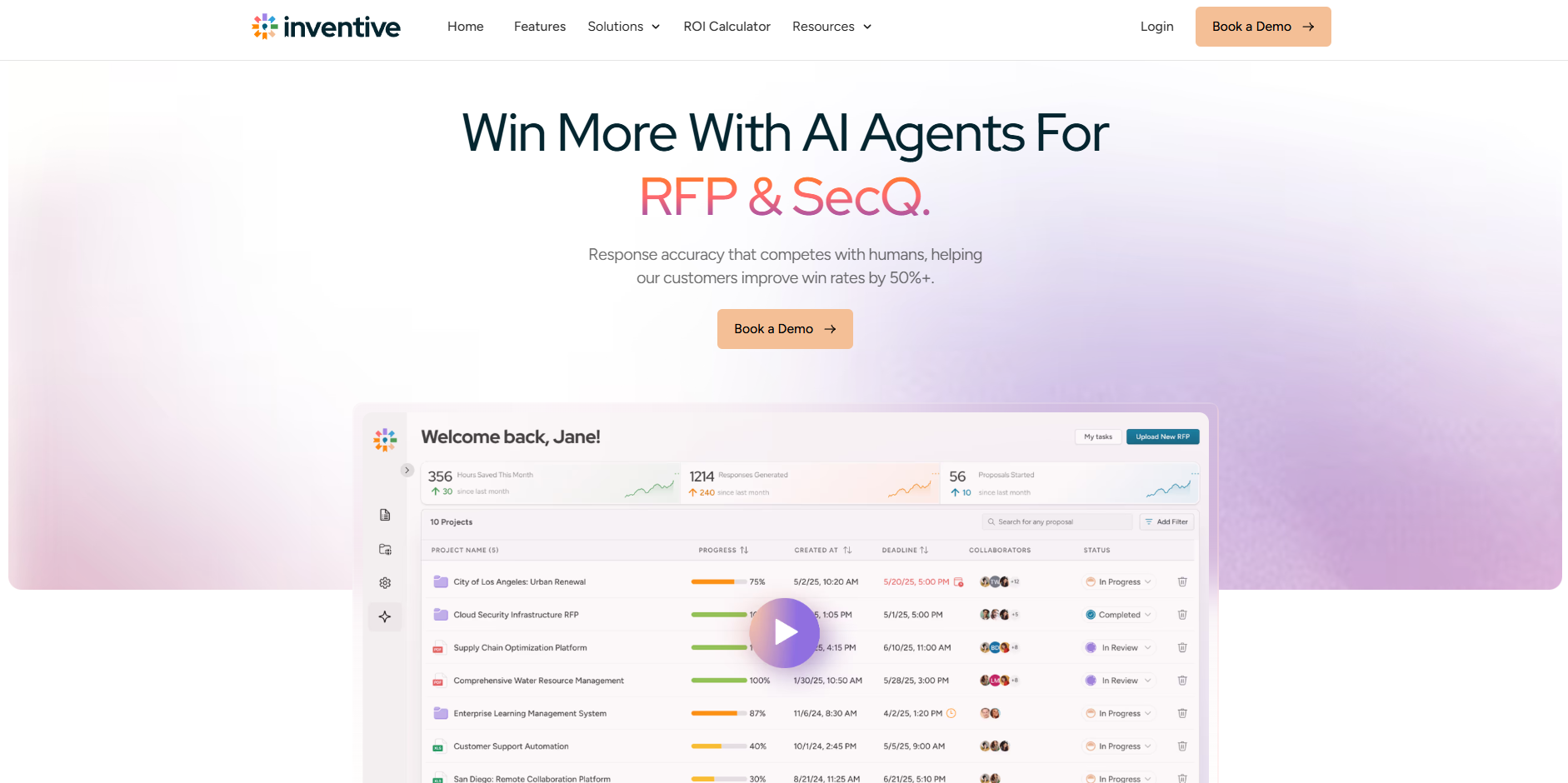
Inventive AI is an autonomous AI agent platform for RFPs, RFIs, DDQs, and security questionnaires. Agents read the document, draft answers from the company's own knowledge, and validate them, while people stay in the loop to approve.
What it does
- Reads an uploaded RFP, RFI, DDQ, or security questionnaire and identifies the questions and requirements automatically
- Retrieves answers from the company's existing documents and past responses
- Drafts a response to each question, showing the source it used and a confidence score
- Lets teams assign, review, edit, and approve answers in one workspace
- Connects to existing systems (SharePoint, Google Drive, Salesforce, Confluence, Notion, HubSpot) and keeps the answer library current as those sources change.
- Adds strategic agents on demand, a Full Response Analyzer to check the whole document, a Go/No-Go agent to score deal fit, and a Competitive Intelligence agent to sharpen positioning against named competitors.
Pros (from G2)
- Draft quality often needs minimal editing; several reviewers report drafts exceeding expectations
- Confidence scores show which answers are backed by strong internal documentation and flag gaps instead of guessing
- Ranked #1 on G2 for ease of use in the RFP software category
- Reviewers report saving roughly five days per RFP
Cons (from G2)
- Analytics and reporting are limited and less customizable than dedicated revenue platforms
- No mobile app for reviewing or approving on the go
- No native Jira integration for engineering or security workflows
Pricing
Usage-based, scaled to your RFP and questionnaire volume rather than a flat per-seat fee. Exact pricing is custom and quote-based.
Best for
Small to Mid-market and enterprise proposal, presales, RevOps, security, and compliance teams handling high volumes of RFPs, DDQs, and security questionnaires.
Also Read: 15 Best RFP Software in 2026: Features, Prices and Reviews
2. Clari
Gartner Rating: 4.7/5
Category: Revenue Forecasting and Pipeline Intelligence
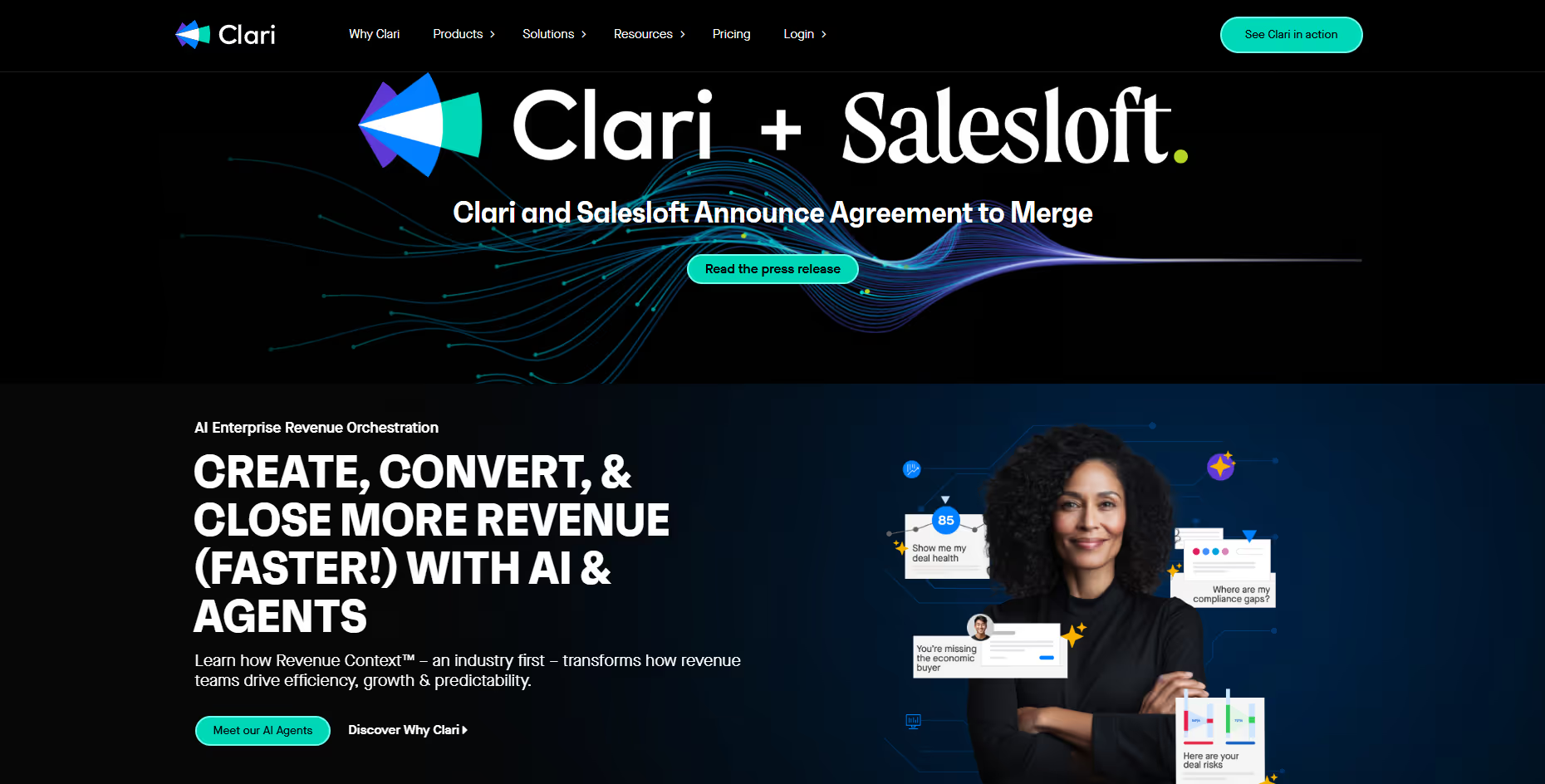
Clari provides revenue forecasting and deal visibility for SaaS revenue teams. It consolidates sales activity, CRM data, and engagement signals to surface real-time insights on pipeline health and conversion likelihood.
Key Benefits
- AI-driven forecasting for revenue predictability
- Deal inspection tools to identify at-risk or stalled opportunities
- Pipeline coverage analysis and quota tracking
- Scenario modeling for best/worst case outcomes
- Native integrations with Salesforce and other CRMs
Pros
- Offers clear visibility into deal progress and pipeline accuracy
- Helps leaders identify gaps early in the revenue cycle
- Useful for coordinating between sales, presales, and RevOps functions
Cons
- Forecast accuracy depends heavily on disciplined CRM data hygiene
- Less suited for content-heavy proposal or presales workflows
- Limited ability to automate proposal or document creation
Pricing
Custom enterprise pricing based on user volume, pipeline complexity, and integration depth.
Best For
CROs, RevOps leaders, and enterprise SaaS teams seeking data-backed forecasting and risk detection to improve revenue predictability and decision-making.
Also Read: Best Revenue Operations Software: AI Tools for RevOps Teams
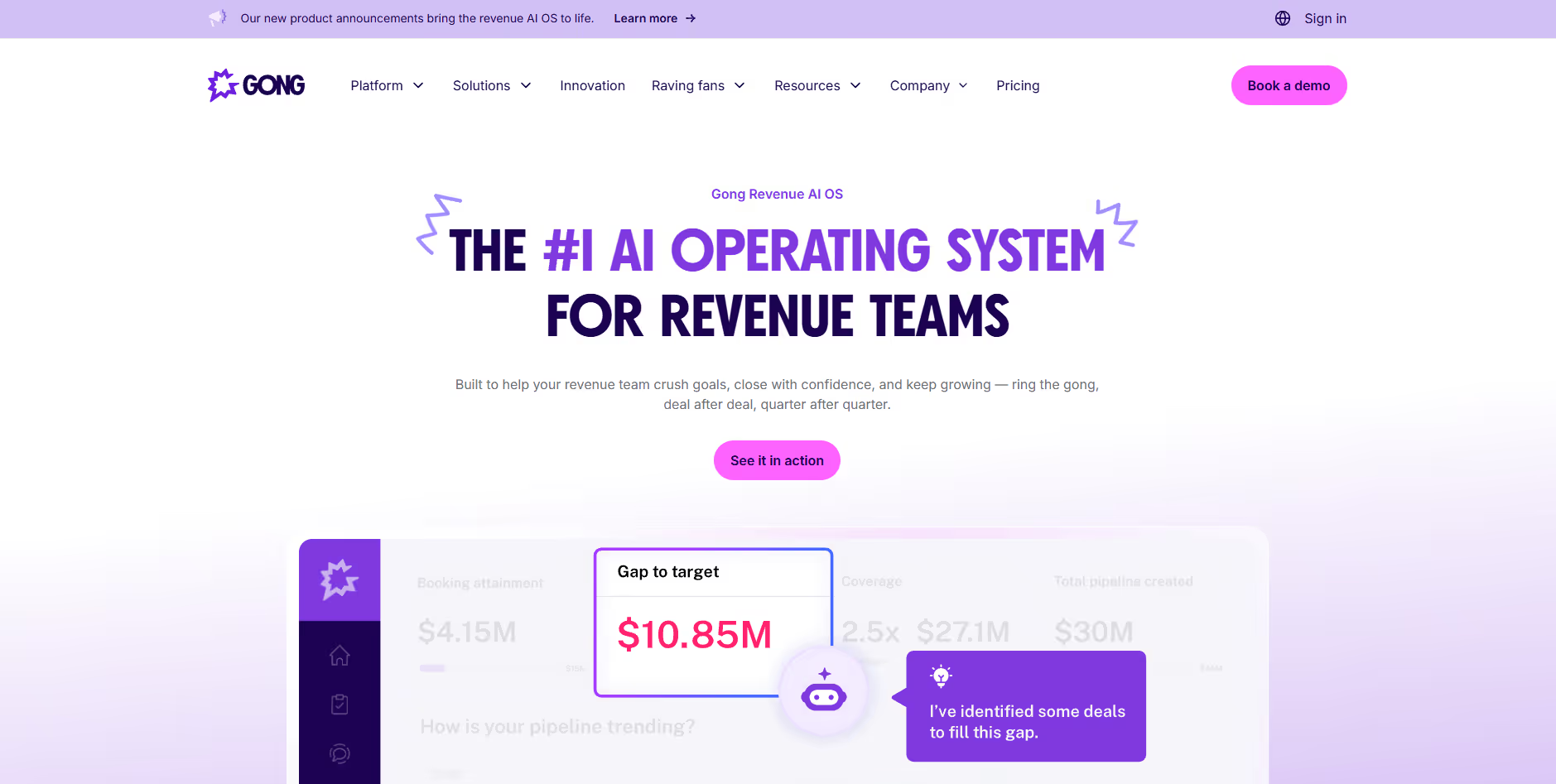
3. Gong
Gartner Rating: 4.7/5
Category: Conversation Intelligence and Buyer Insights
Gong uses AI to analyze sales conversations, demos, and emails to identify buyer intent, sentiment, and deal risks. It provides visibility into how prospects respond, what objections surface, and how engagement patterns evolve throughout the sales cycle.
Key Benefits
- Automatic call recording and transcription
- Sentiment, tone, and objection detection
- Deal health and engagement dashboards
- AI coaching recommendations based on interaction data
- CRM and video conferencing integrations
Pros
- Centralized view of buyer interactions and risk factors
- Enables sales coaching using data from real conversations
- Supports consistent deal review and performance benchmarking
Cons
- Focused mainly on sales interaction analytics, not proposal workflows
- May generate large data volumes requiring clear process alignment
- Doesn’t provide capabilities to directly improve proposal quality or conversion rates.
Pricing
Available upon request; varies based on user count and analytics scope.
Best For
SaaS sales and presales teams using conversational data to refine messaging, improve coaching, and prioritize high-intent opportunities.
Also Read: AI Sales Enablement: The Complete Guide & Top Tools
4. Salesforce

Gartner Rating: 4.4/5
Category: CRM and AI-Driven Sales Productivity
Salesforce Sales Cloud adds AI to the CRM through Agentforce (formerly Einstein Copilot), which handles record updates, scoring, and deal recommendations inside Salesforce.
What it does
- AI agents (Agentforce, formerly Einstein Copilot) for CRM updates and next-step suggestions
- Lead and opportunity scoring from activity signals
- AI-drafted sales emails and follow-ups
- Forecast modeling and pipeline visibility
Pros (from G2)
- Keeps the whole workflow in one place — leads, tasks, and activity tracking
- Highly customizable to almost any sales process
- Deep reporting once configured
Cons (from G2)
- Slow page loads when switching between leads, tasks, and views
- Expensive once licensing, add-ons, and customization stack up — hard for smaller teams
- Steep learning curve and admin-heavy; simple tasks take too many clicks
Pricing
Tiered subscription model across Starter, Professional, Enterprise, and Unlimited editions; advanced AI capabilities are available as add-ons.
Best For
SaaS teams already operating on Salesforce who need embedded AI automation for daily sales management and forecasting.
5. HubSpot Sales Hub
Gartner Rating: 4.4/5
Category: Sales CRM and Predictive Lead Scoring
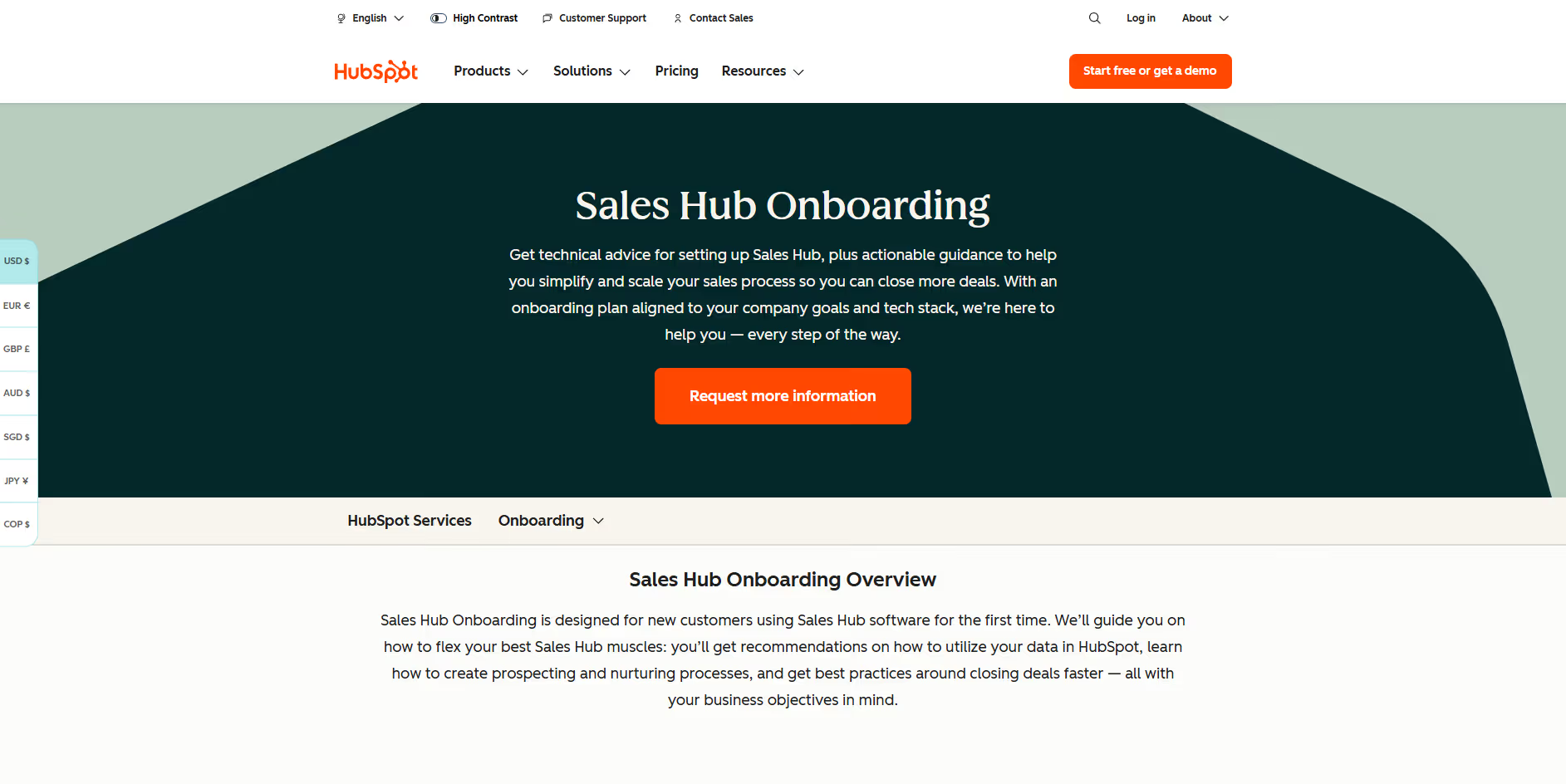
HubSpot Sales Hub pairs CRM automation with AI scoring and email personalization for managing inbound leads and pipeline.
What it does
- Predictive lead scoring and prioritization
- AI email personalization and sequences
- Contact timeline showing every email, call, visit, and meeting
- Deal tracking and pipeline dashboards
Pros (from G2)
- Easy to learn, reps are productive in hours, not weeks
- Excellent contact timeline for a full view of prospect engagement
- Clean visual pipeline for tracking deals
Cons (from G2)
- Steep 5× price jump from Starter (~$20/seat) to Professional (~$100/seat), plus mandatory onboarding fees ($1,500 Pro / $3,500 Enterprise)
- Confusing seat and permission management
- Sequences and reporting get limiting as SDR teams scale; Breeze AI can lag
Pricing
Starter ~$15–20/seat/mo; Professional ~$100/seat/mo + onboarding fee; Enterprise ~$150/seat/mo.
Best For
Growth-stage SaaS organizations that prioritize inbound sales and need AI support for lead prioritization and pipeline management.
6. Cognism
Gartner Rating: 4.3/5
Category: B2B Data Intelligence and Prospecting
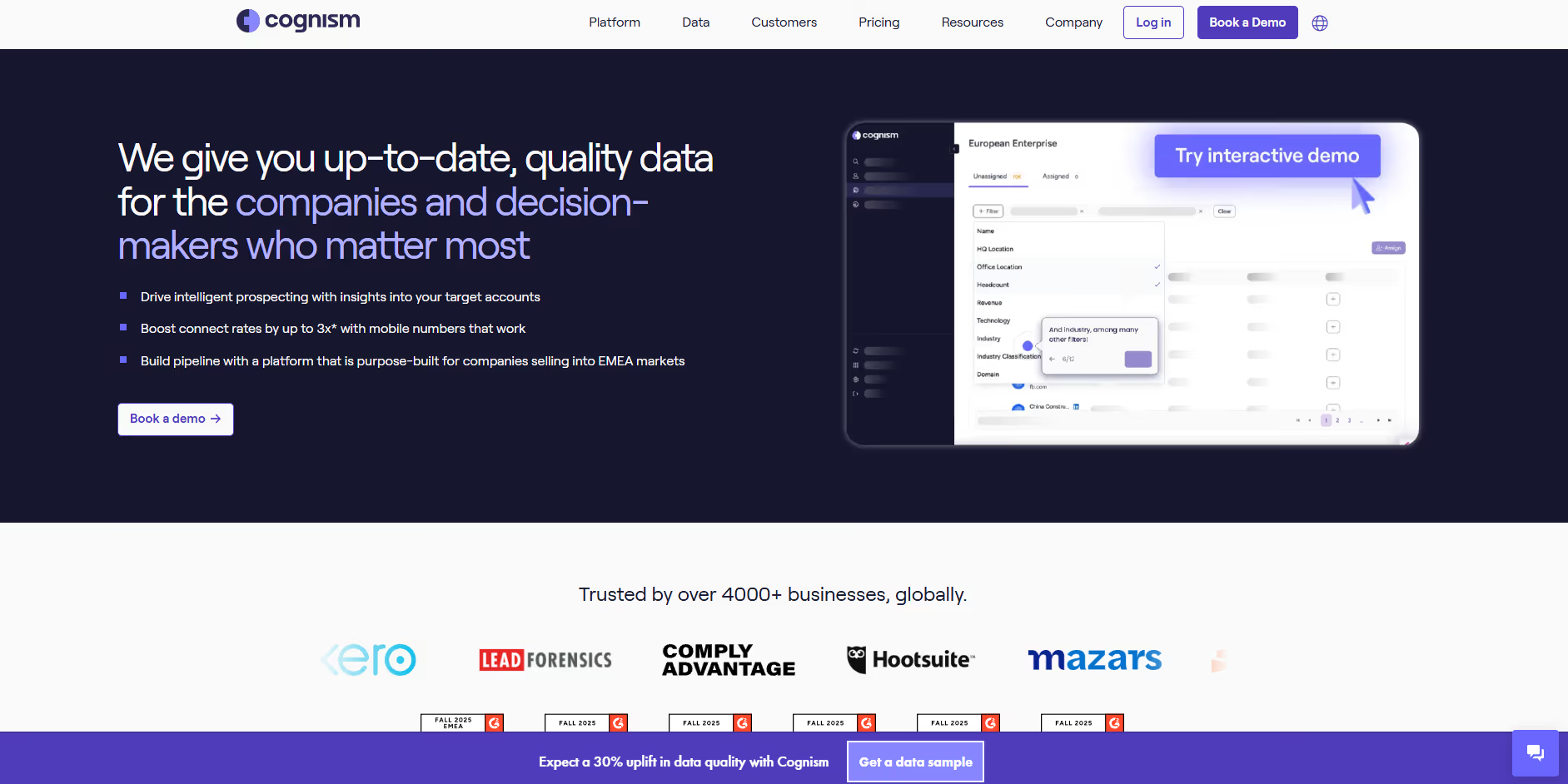
Cognism provides a GDPR-compliant global database enhanced with AI to identify in-market accounts, enrich contact data, and prioritize leads based on buyer intent signals. It supports top-of-funnel pipeline building for B2B SaaS teams.
Key Benefits
- Verified, compliant B2B contact data (email and direct dial)
- Intent data for identifying active prospects
- Chrome extension for real-time contact discovery
- AI-driven lead scoring and prioritization
- Integration with Salesforce, HubSpot, and Outreach
Pros
- Accurate and compliant data for prospecting
- Reduces wasted outreach on unqualified leads
- Integrates smoothly with popular CRM and engagement tools
Cons
- Focused on data enrichment, not full sales cycle management
- Limited analytics and reporting depth compared to revenue platforms
- Lacks proposal generation and content optimization features
Pricing
Custom subscription-based pricing based on data volume and region coverage.
Best For
B2B SaaS revenue teams seeking reliable, compliant prospect data and intent signals to improve lead quality and accelerate top-of-funnel engagement.
7. 6sense

Gartner Rating: 4.4/5
Category: Predictive Intelligence and Account-Based Marketing (ABM)
6sense applies AI-driven predictive modeling to identify in-market accounts and prioritize outreach across buying groups. By analyzing keyword intent data, web activity, and CRM history, it helps SaaS revenue teams focus their engagement on accounts most likely to convert.
Key Benefits
- AI-based buying stage prediction and account prioritization
- Intent data capture from first- and third-party sources
- Account and persona-level engagement tracking
- Integration with Salesforce, HubSpot, Outreach, and Marketo
- Dashboards for pipeline influence and revenue attribution
Pros
- Provides early visibility into accounts researching your solution
- Helps SDRs and AEs prioritize high-intent targets
- Supports marketing and sales alignment through shared ABM data
Cons
- Requires integration maturity for best performance
- Limited usability for teams not practicing ABM-based selling
- AI predictions are limited to account prioritization, without actionable insights for proposal quality.
Pricing
Custom enterprise pricing, typically based on the number of tracked accounts and integrations required.
Best For
Mid-market and enterprise SaaS revenue teams using ABM strategies to identify, prioritize, and engage accounts earlier in the buying journey.
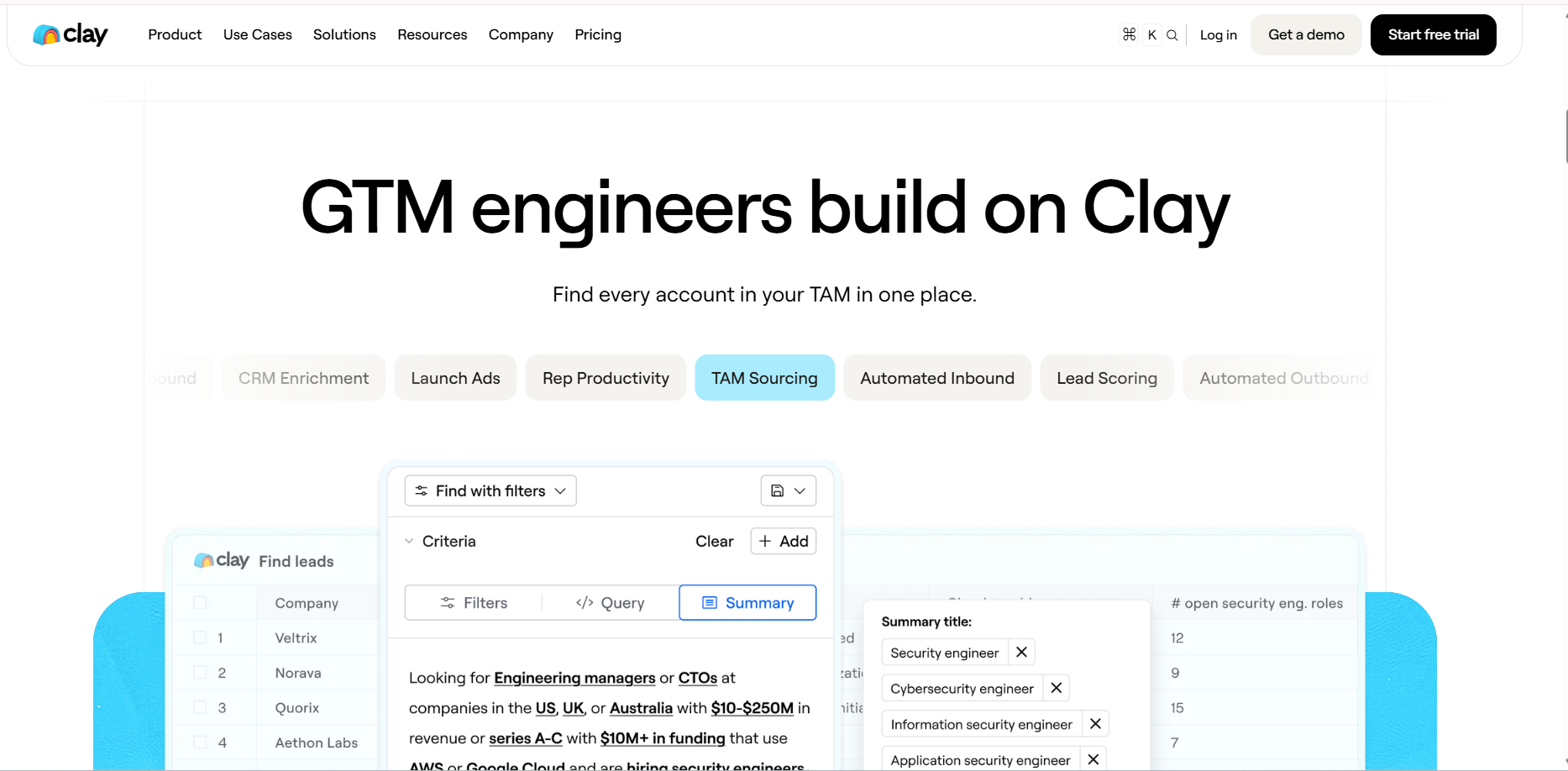
8. Clay
Category: Data enrichment & prospecting automation · G2 rating: 4.6/5 on G2
What it does
- Chains 50+ data providers to raise match rates on emails, phones, and firmographics
- "Claygent" AI agent reads websites, job posts, or filings and returns structured data
- Automated list-building and enrichment workflows
- CRM and outreach integrations
Pros (from G2)
- Higher data coverage by combining providers (users report jumping from ~40% to 80%+ match rates)
- Replaces several tools, scraper, enrichment vendor, list-cleaner with one
- AI research automates manual lead investigation
Cons (from G2)
- Steepest learning curve in this list. Not plug-and-play (the most common complaint)
- Credit-based pricing gets expensive and is hard to predict
- Overkill if you just need verified emails
Pricing
Tiered by credits and seats; free plan available.
Best for
RevOps and growth teams building custom, repeatable prospecting workflows.
9. Apollo.io
Category: Outreach & engagement · G2 rating: 4.7/5
Apollo combines a prospect database with AI-drafted, multi-channel outreach, so reps find contacts and run sequences in one place.
What it does
- Large B2B contact and company database
- AI email and multi-channel sequence generation
- Buying-intent signals to prioritize prospects
- Chrome extension that pulls verified leads from LinkedIn
Pros (from G2)
- All-in-one: find leads, enrich data, run sequences, track pipeline in one tool
- Fast, deep search filters for building targeted lists quickly
- Transparent per-seat pricing that scales for small teams
Cons (from G2)
- Data accuracy slips for smaller companies and outside North America (EU, APAC, LATAM)
- Interface feels dense and can lag on large lists
- Mobile numbers cost far more credits (8 vs 1) and are less accurate
Pricing
Free tier; paid plans by seat and credits.
Best for
SDR and outbound teams scaling personalized outreach.
10. Salesloft
Category: Sales engagement & cadence · G2 rating: 4.5/5
Salesloft runs multi-step outreach cadences and keeps deal activity in sync, so reps follow a consistent process across email, calls, and social.
What it does
- Builds and runs multi-step outreach cadences across email, phone, and LinkedIn
- Tracks opens, replies, and engagement per step
- Syncs activity and deal data back to Salesforce
- Adds AI features and rules-based automation for follow-ups
Pros (from G2)
- Intuitive interface; reps get productive quickly (ease of use is the top-cited strength)
- Strong cadence builder and sequencing, the core reason teams adopt it
- Accurate Salesforce sync.
Cons (from G2)
- No native power dialer (the single most-cited complaint)
- Sequences only perform with clean data
- Recurring frustrations around contracts and billing; occasional glitches at scale
Pricing
Custom, quote-based by seat and edition; no public list pricing.
Best for
Mid-market and enterprise teams that need structured, repeatable outreach cadences tied to Salesforce.
How to Choose the Right AI Software for SaaS Revenue Teams
1. Integration with your CRM and existing systems
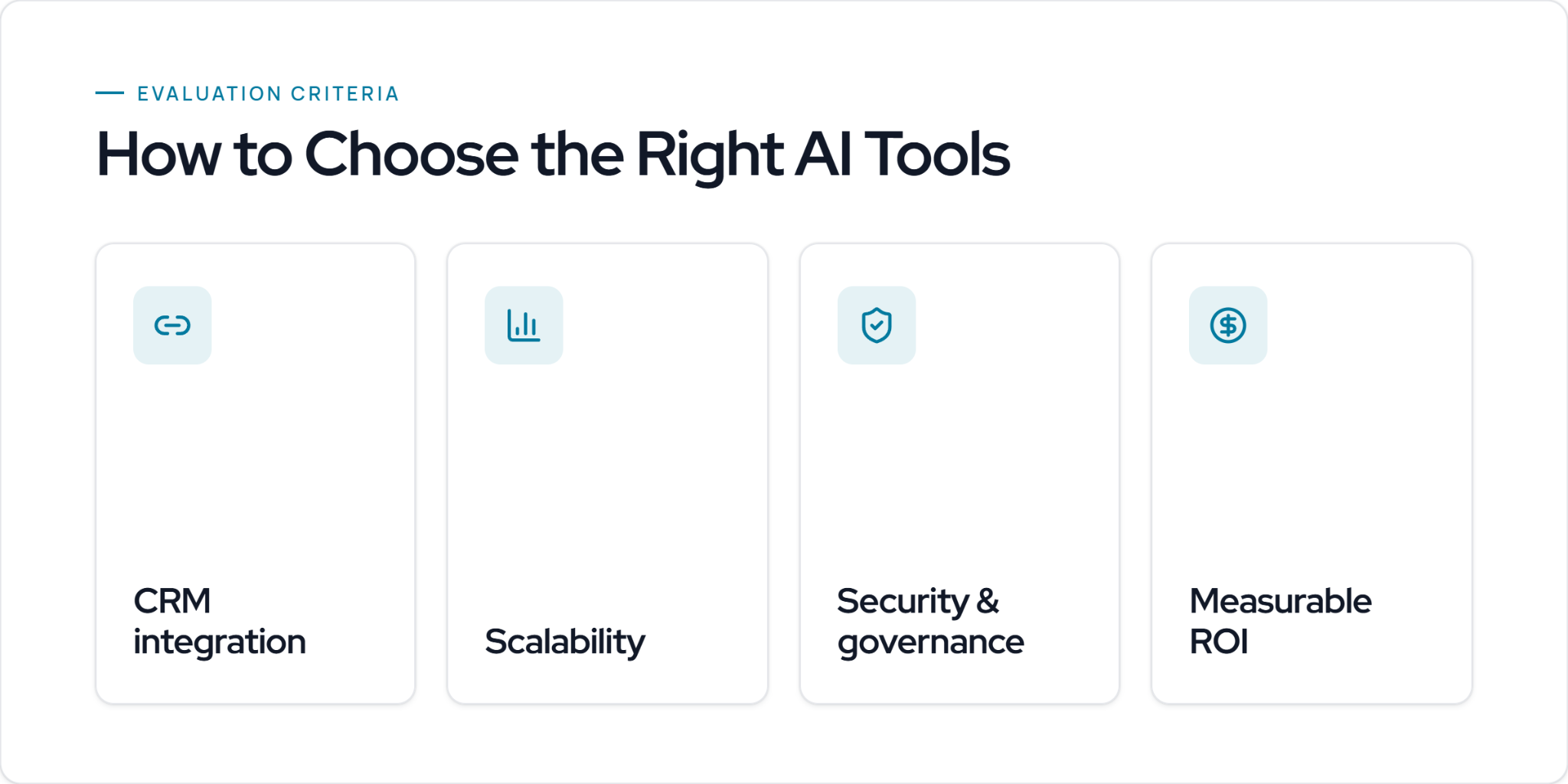
Revenue teams work inside Salesforce, HubSpot, or Dynamics. A tool that forces reps to switch platforms won't get used. Look for tools that connect to the systems your data and knowledge already live in. Clari, for example, syncs with Salesforce for forecasting; Inventive AI connects to SharePoint, Salesforce, and Notion so proposal content flows without a separate library.
2. Scalability as you grow
Deal volume and proposal complexity rise as you scale. Tools should handle spikes, multi-region workflows, and multiple products without slowing down. Check for role-based access and collaboration across Slack or Teams to keep distributed teams aligned.
3. Security and data governance
Proposal and pipeline data is sensitive: customer pricing, compliance answers, contract terms. Look for role-based permissions, encryption, audit logs, and SOC 2 compliance. For AI software specifically, ask where responses come from: tools that cite their sources are easier to trust and review than those that generate freely.
4. Measurable ROI
Ask every vendor for evidence, not promises, named case studies with real numbers. As a benchmark, Inventive AI customers report results like a 100-question RFP dropping from 4–5 hours to 20–30 minutes, win rates moving from 30% to 50%, and 422% ROI at AssetWorks. Hold each tool to that standard of proof.
Also Read: 10 Best Enterprise RFP Software in 2026 for Winning Deals
Where to Start: Match the Tool to Your Biggest Revenue Leak
No single tool runs the whole revenue engine. The fastest wins come from fixing your biggest bottleneck first, then adding tools around it.
Diagnose where deals actually slow down. If reps chase the wrong accounts, start with prospecting and intent data. If outbound is slow, start with outreach. If forecasts keep missing, start with pipeline intelligence. If RFPs and security questionnaires stall late-stage deals, start with proposal automation.
That last stage is where Inventive AI fits, an autonomous AI agent platform that drafts RFP and questionnaire answers from your connected knowledge, cites each source, and flags anything unsupported for review. Customers report cutting response time up to 90% and raising win rates from 30% to 50%.
Frequently Asked Questions (FAQs)
1. How do AI software help SaaS revenue teams?
AI software automate repetitive tasks like drafting proposals, retrieving technical content, and formatting RFP responses. This allows SaaS revenue teams to focus on higher-value activities, tailoring solutions to client needs and aligning with buyer evaluation criteria.
2. What’s the difference between AI for SaaS sales vs generic sales tools?
Generic AI sales tools focus on prospecting or outreach. In contrast, SaaS-specific AI platforms (like Inventive AI) address the technical and compliance-heavy parts of the sales cycle, such as RFPs, security questionnaires, and proposal automation.
3. Which AI software improves SaaS proposal workflows?
Tools like Inventive AI (proposal automation), Clari (forecasting and pipeline visibility), and Gong (conversation intelligence) improve SaaS proposal workflows by reducing manual drafting, providing buyer insights, and ensuring accuracy across all submissions.
4. How quickly can SaaS teams see ROI from AI adoption?
Most SaaS teams report tangible ROI within the first 3–6 months, driven by faster response cycles and improved win rates. For teams with high proposal volumes, savings are visible even sooner.
5. Is it safe to use AI for SaaS revenue operations?
Yes, when the platform is built for enterprise use. Look for role-based access, audit trails, private data storage, and SOC 2 compliance. Just as important is how the AI produces answers.

.avif)


.png)